Dissolved oxygen in RAS: how to read it and when to act
In recirculation, oxygen is the first line of defence. How to measure it, which patterns anticipate a problem and what to do before it becomes an emergency.
In a recirculating aquaculture system (RAS) water is reused again and again, and the oxygen consumed by the fish and the biofilter bacteria must be replaced continuously. That is why a failure in oxygen injection or aeration shows up within minutes, not hours.
Where and how to measure
- At the tank outlet, not only at the inlet: it is where the water has the least oxygen and where a problem shows first.
- Always at the same time of day, so days can be compared. If you have online sensors, manual readings are still useful to check calibration.
- In mg/L and in % saturation: the percentage lets you compare rooms at different temperatures.
Patterns that anticipate a problem
- A slow, sustained drop over several days: it may point to more biomass than the system can handle, a clogged diffuser or a higher organic load.
- A growing gap between inlet and outlet: the fish are consuming more (growth, more feed or higher temperature).
- Dips after feeding: consumption rises after each ration; if the minimum gets close to the threshold, consider splitting feeding or boosting oxygen at that time.
What to do when an alert goes off
- Confirm the value with a second reading.
- Check the oxygen supply, diffusers and the room's flow.
- If the value stays low, reduce or stop feeding until safe levels are restored.
- Record what happened: the cause and the action taken matter as much as the value.
Logbook and traceability
Every low-oxygen event teaches something. Keeping the history per room, with the cause and the response, helps adjust thresholds, plan maintenance and demonstrate control in audits and certifications.
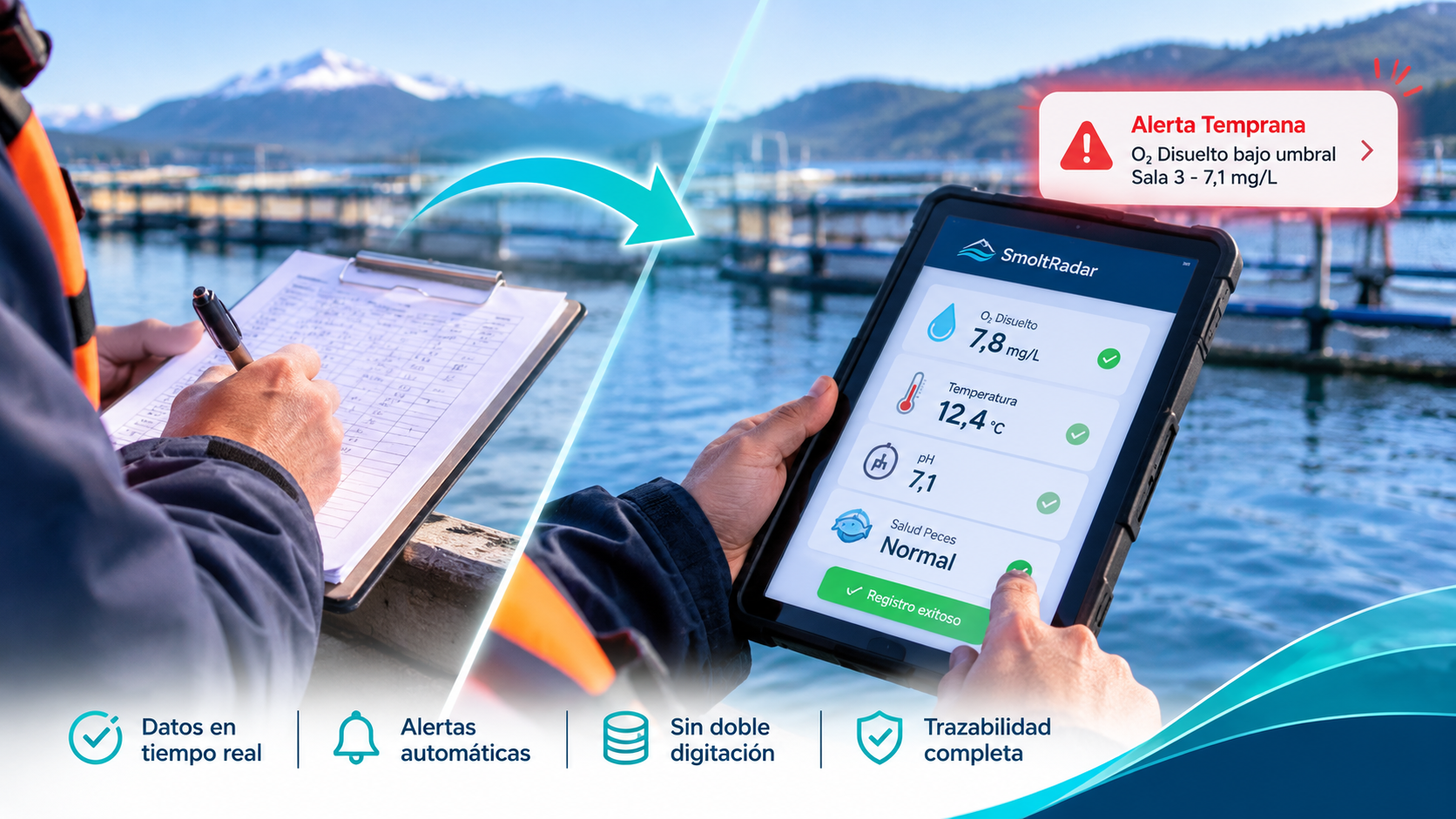
SmoltRadar logs oxygen per tank, raises alerts when it falls below the room's threshold and keeps a record of who responded and what they did.
The criteria mentioned are general. Thresholds and emergency protocols should be defined with each hatchery's technical and veterinary team.