Digital transformation
From paper to tablet: digitizing sampling without losing control
How to move a hatchery from paper sheets to digital records: what you gain, common mistakes and a four-week implementation roadmap.
SmoltRadar team
· 2 min read
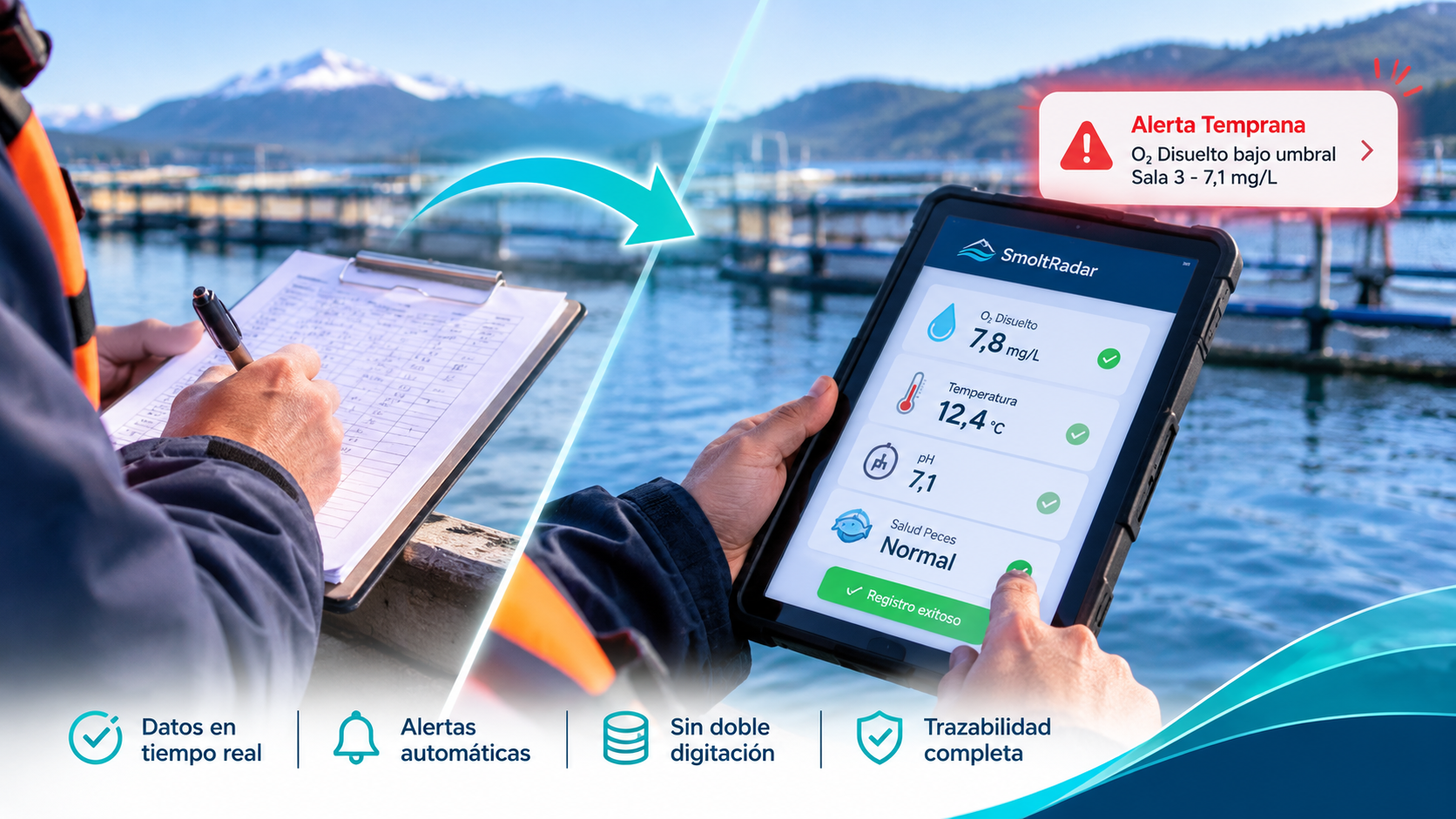
Many hatcheries still record their sampling on paper and type it into a spreadsheet at the end of the day or the week. It works, but it has a hidden cost: data that arrives late, transcription errors and alerts nobody sees in time.
What you gain by going digital
- Data is checked on the spot: if a value is out of range, the operator sees it on the same screen and can repeat the reading.
- Alerts go out automatically to whoever needs to act, without waiting for someone to review the sheet.
- No double data entry: what is recorded in the room is what reaches the report.
- Traceability: who measured, when and with what result, ready for audits and certifications.
Common mistakes
- Digitizing the sheet as it is, with every field, instead of starting with the essentials.
- Ignoring connectivity: rearing rooms often have poor signal; recording must work offline and sync later.
- Leaving operators out of the design: if the form is awkward with gloves on a tablet, they will go back to paper.
- Not defining thresholds: without ranges per room, the system cannot warn about anything.
A four-week roadmap
- Week 1: set up hatcheries, rooms and thresholds; choose a pilot room.
- Week 2: record in parallel (paper and tablet) in the pilot room and fine-tune the form.
- Week 3: roll out to every room and decide who receives each alert.
- Week 4: drop paper, review the first reports and measure the time saved.
How SmoltRadar handles it
Operators record from the tablet, even offline; every value is compared with its room's threshold; alerts arrive by email, WhatsApp or SMS, and regulatory and management reports are generated from the same data.
If you want to see it working, explore the live demo or book a session with our team.